Playground Surfacing Options Compared: Rubber, Turf, Mulch, and EWF
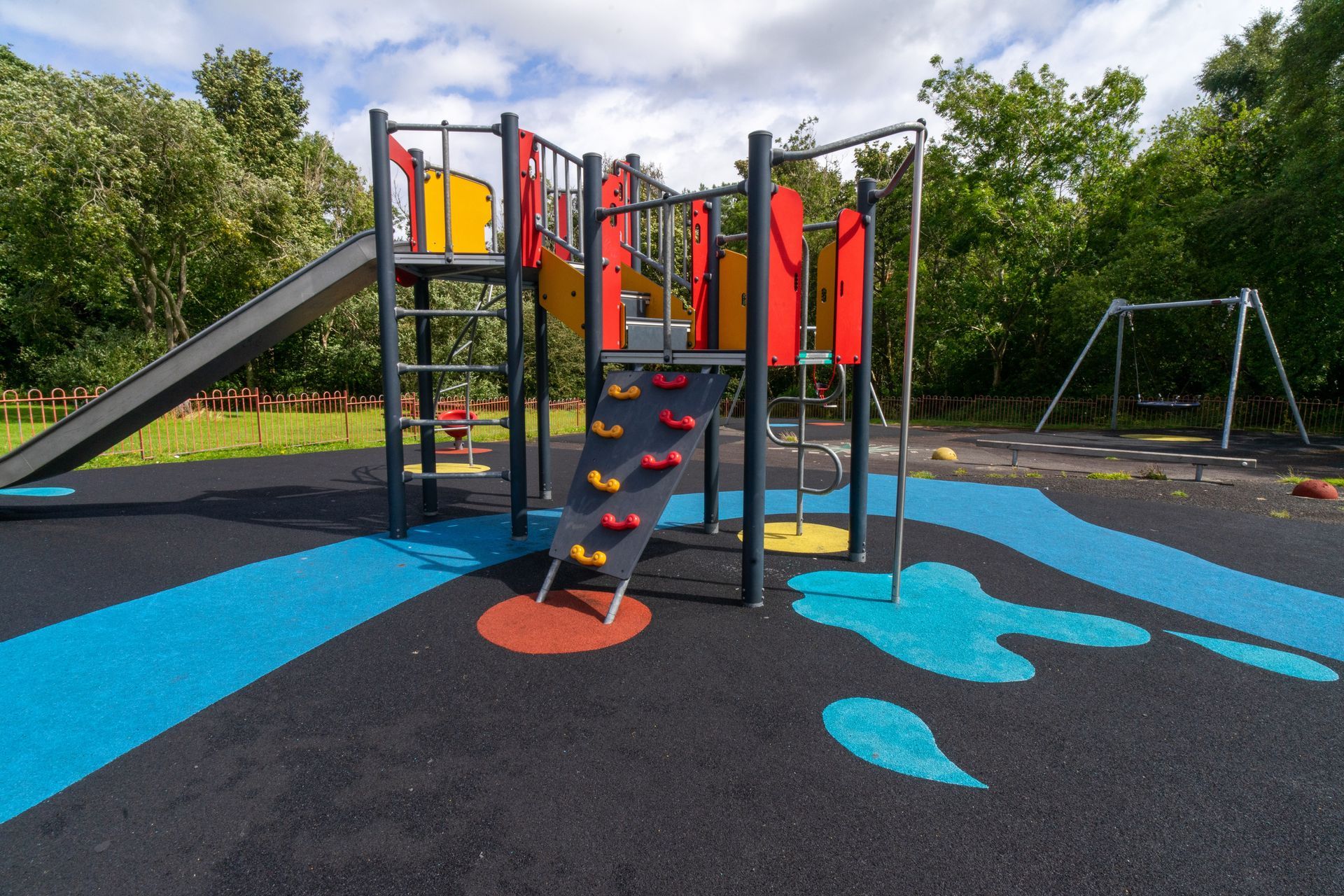
• Poured rubber offers a firm, accessible surface with strong impact performance and low routine maintenance.
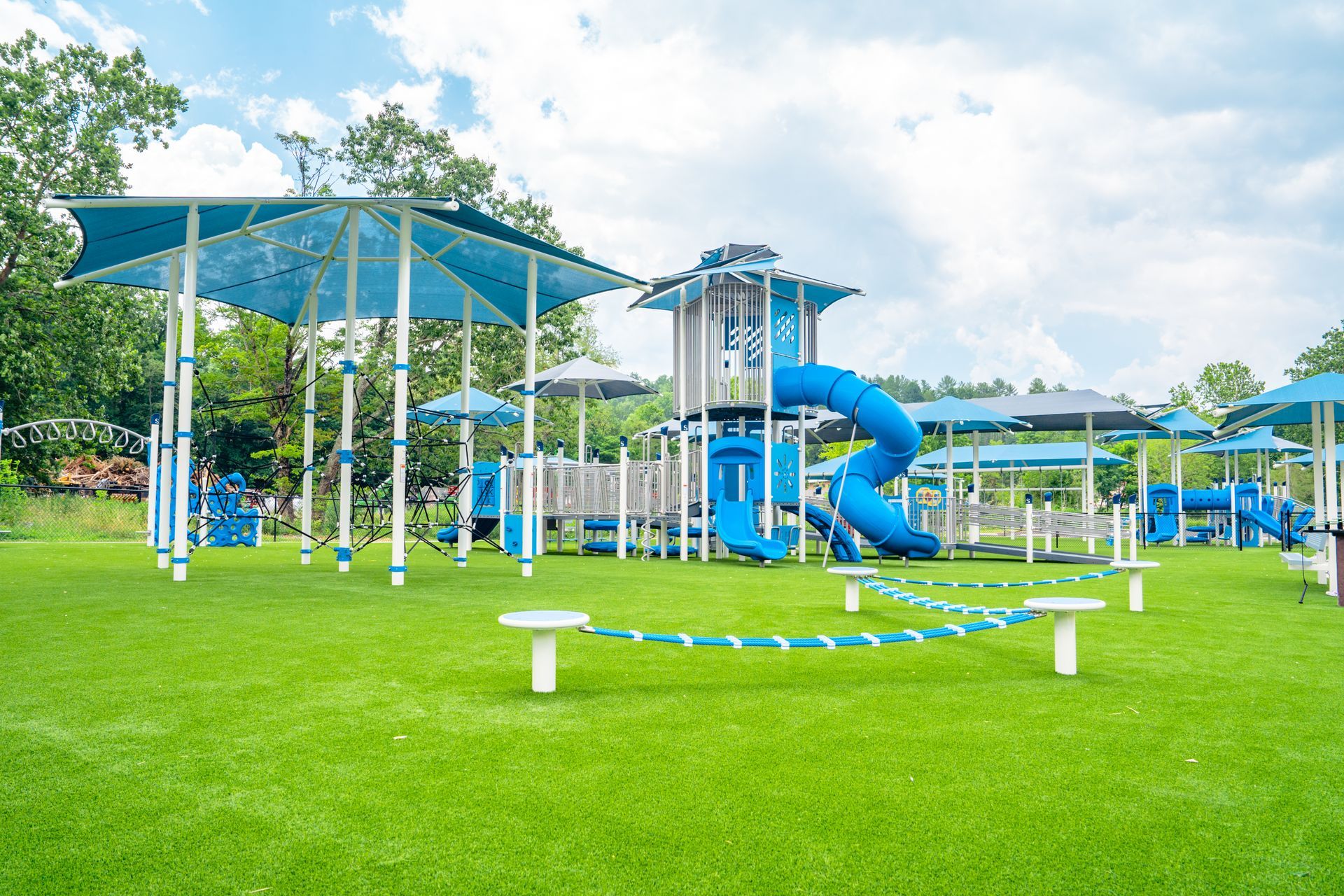
• Playground turf provides a clean look but depends on proper drainage and fall protection.
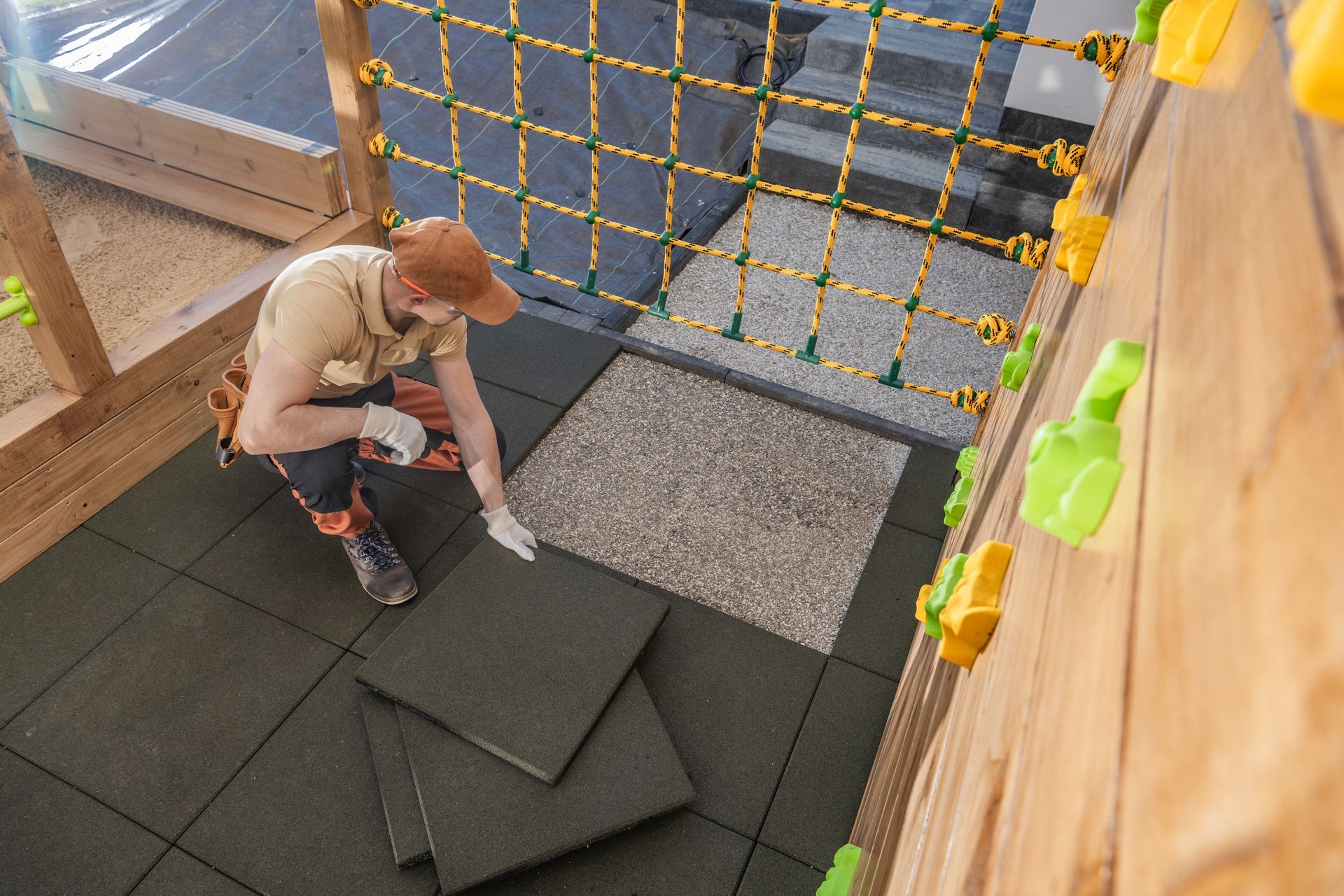
• EWF and playground mulch may lower upfront costs, but loose fill surfaces need regular leveling and replenishment.
Choosing the right playground surfacing means balancing safety, accessibility, maintenance, appearance, and budget. For schools, parks, and community spaces, playground safety surfacing must also match intended fall heights and daily use. A poured rubber playground surface, playground turf, an engineered wood fiber playground surface, and playground mulch each offer different advantages.
Comparing Playground Surface Materials
Poured rubber creates a seamless surface that can support accessible routes and customized designs. Its initial cost is often higher, but durability and lower routine maintenance can provide strong long-term value.
Artificial turf offers a finished appearance and can work well in high-use spaces when installed with an appropriate impact-absorbing system. Routine care may include cleaning, brushing, and checking infill.
Engineered wood fiber is a cost-conscious loose fill option that can support accessibility when properly installed and maintained. It must stay at the correct depth as material shifts.
Playground mulch can provide impact protection with a lower initial investment, but the material may move, compact, and require replenishment.
Safety and Accessibility Come First
No surface eliminates every injury risk. Installation, depth, drainage, inspections, and maintenance all affect performance. ADA playground surfacing should support accessible routes that remain firm and stable, while applicable ASTM guidance helps inform impact performance.
At MAPA Recreation, we help communities compare options based on site conditions, use, budget, and maintenance goals. Request a site consultation to plan a surface that supports safety, access, and lasting value.